
Cream of the Creek: Welcome to Big Sandy Creek Dairy
On a quiet stretch of pastureland in Madison, Georgia, the story of Big Sandy Creek Dairy (BSCD) begins not with cows, but with a leap of faith. In 1947, the Benkoski family packed up their lives in Connecticut and moved south, putting down roots that would grow into a multigenerational dairy farm. Nearly eight decades later, that same land continues to sustain not only a herd of Holsteins, but a family deeply committed to agriculture, education, and community.
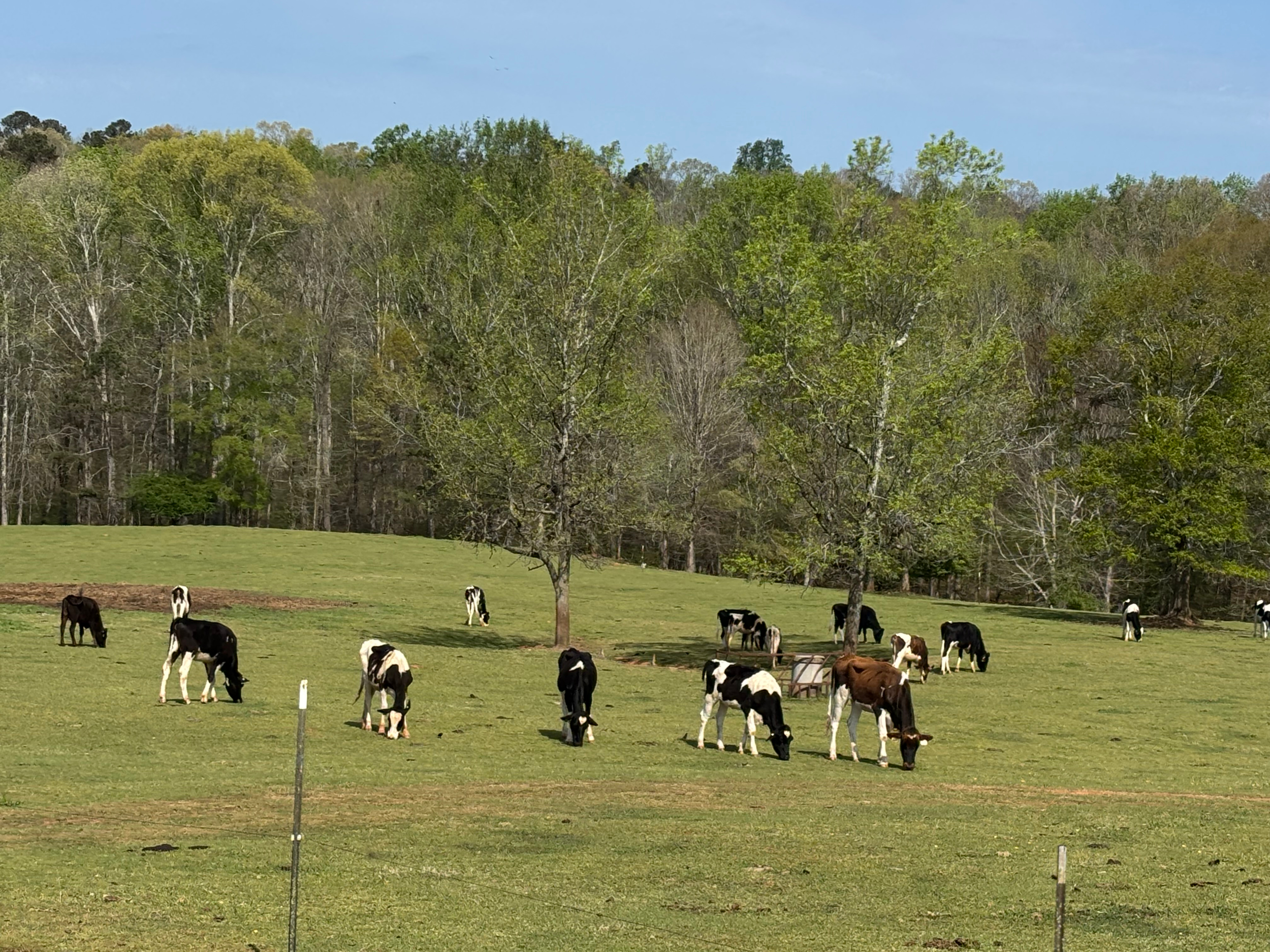
Holsteins graze on pasture at Big Sandy Creek Dairy.
Today, Big Sandy Creek Dairy milks around 80 Holstein cows, a modest herd by industry standards but one that keeps the operation intentionally hands-on. The rhythm of the farm is steady and unyielding. Mornings and evenings revolve around milking, a twice-daily responsibility that never pauses for weekends or holidays. In between, cows and calves must be fed, cared for, and monitored. The work that shifts with the seasons but never slows down.
Farmer John leads the daily charge, handling milking and much of the farm labor. But the Benkoski operation is far from a one-person show. In fact, it’s a family effort in the truest sense, with the women extending the farm’s reach well beyond the milking parlor.
While dairy production remains the backbone of the farm, Big Sandy Creek Dairy has evolved into something more: a hub for agricultural education and community engagement. What began as the simple idea to invite their daughter, Katelin’s, preschool class to visit, has grown into a full agri-tourism program. Today, the farm hosts tours, summer camps, a Dairy Day Camp, and even a 5K. They loan calves to FFA and 4-H students, provide cows for local events, and participate in Discover Dairy’s Adopt-A-Cow Program, all with the goal of reconnecting people to the source of their food.
That educational mission was sparked by Julie Benkoski, a full-time teacher and the family’s driving force behind agri-tourism. Julie and John began to recognize a growing disconnect between students and agriculture. With that as her motivation, she helped transform the farm into a living classroom where learning is hands-on and often eye-opening. She now organizes camps, prepares materials for teachers, and continues to expand the farm’s educational outreach.
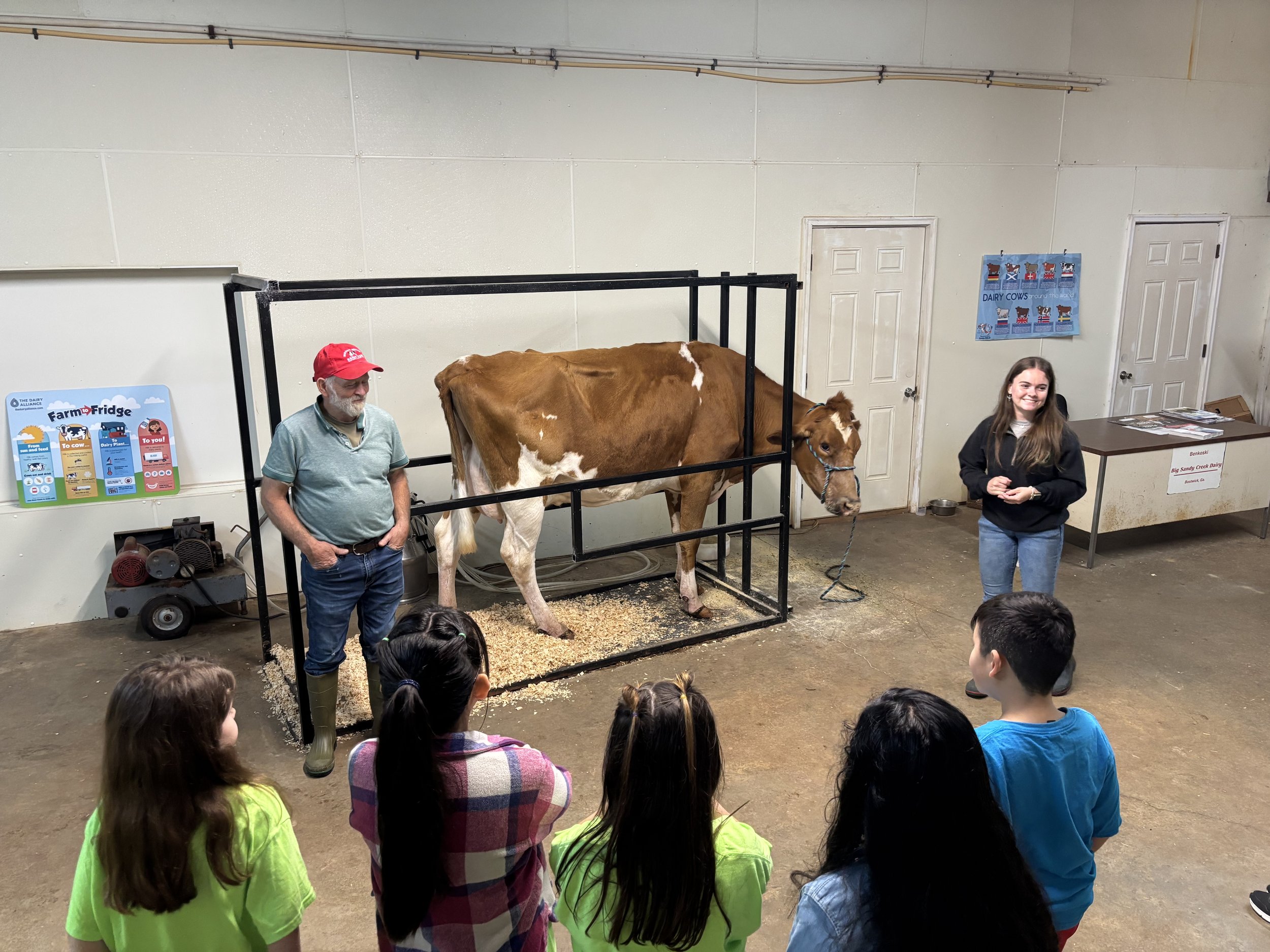
Farmer John and Brooke educate a group of students about how cows are milked during a field trip.
Other family members fill equally vital roles. Alissa manages the website, Leah coordinates tours and handles communications, and Katelin oversees social media, outreach, show calves, and animal health. Even with off-farm jobs, each of these women contribute to the operation’s success. Their collaborative effort extends to a team of employees, also primarily women, who help run tours and keep visitors of all ages engaged. Brooke, a key member of that team, is known as the go-to for both farm tasks and guiding guests through the experience.
Together, they’ve built more than a farm. They’ve created a place where agriculture is accessible, transparent, and personal.
That transparency is especially important in an industry often misunderstood. The family regularly encounters misconceptions like the idea that “brown cows produce chocolate milk,” to more serious concerns about animal welfare, environmental impact, and nutrition. Through tours and conversations, they work to replace myths with facts, showing visitors firsthand the care and responsibility that goes into dairy farming.
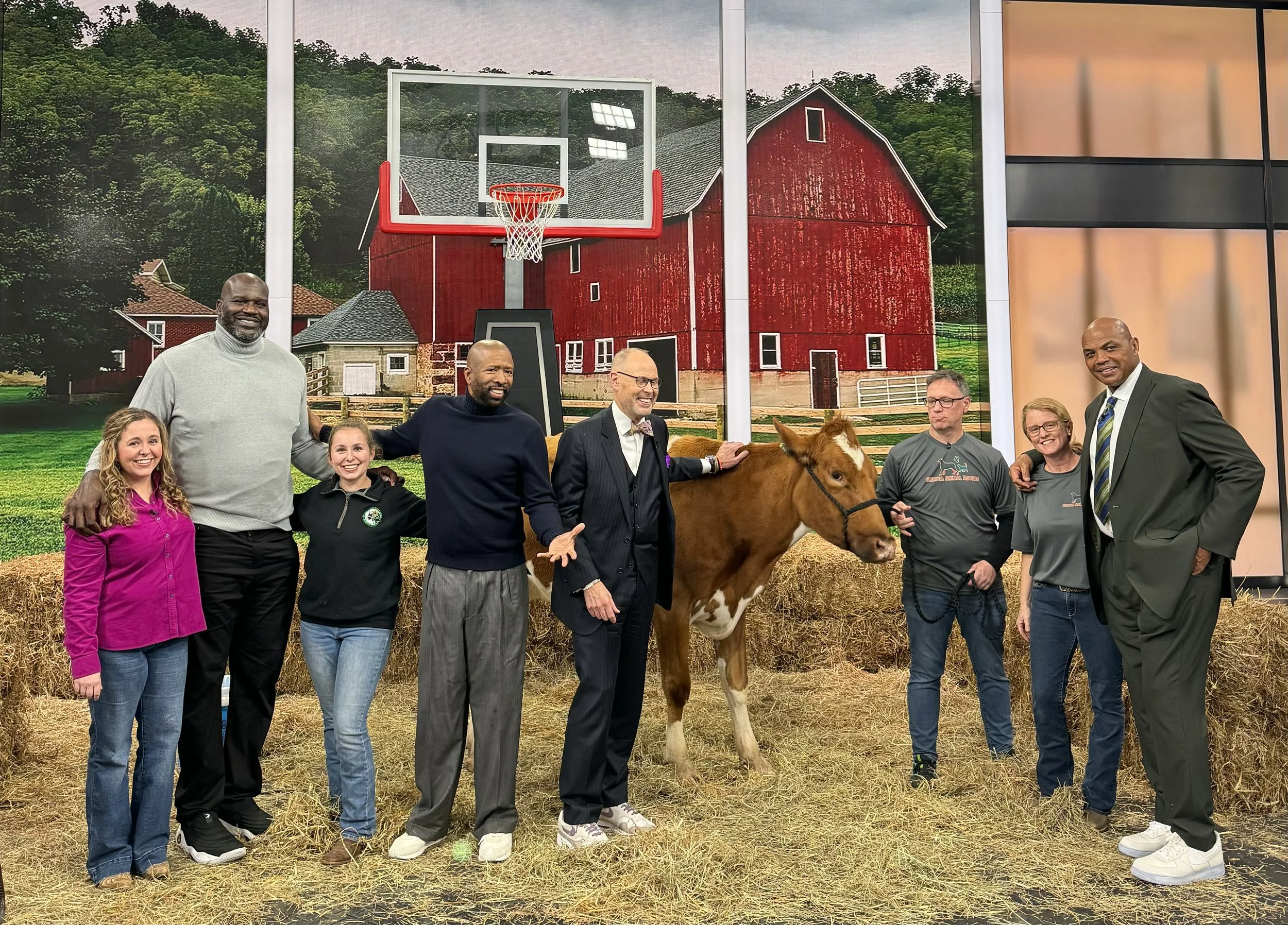
BSCD team and Rosie the Red Holstein, teach Shaquille O'Neal how to milk a cow at dairy convention in Atlanta, GA; cir. 2024. Photo provided by Katelin Benkoski.
Their milk, sold through Dairy Farmers of America, travels from cow to grocery store shelves in as little as 48 to 72 hours, often staying within the region due to its perishability. For consumers curious about its origin, a code on the container can trace it back to farms like Big Sandy Creek, a tangible link between producer and plate.
Still, the work is not without its challenges. Like many in agriculture, the family faces fluctuating commodity prices, unpredictable weather, and the ongoing need for reliable labor. And, as with any family business, there’s the added dynamic of balancing differing opinions and ideas.
What is life like operating a family-run, but largely women-led farm?
“Challenging,” says Katelin. “We all have opinions on how things could be done better.”
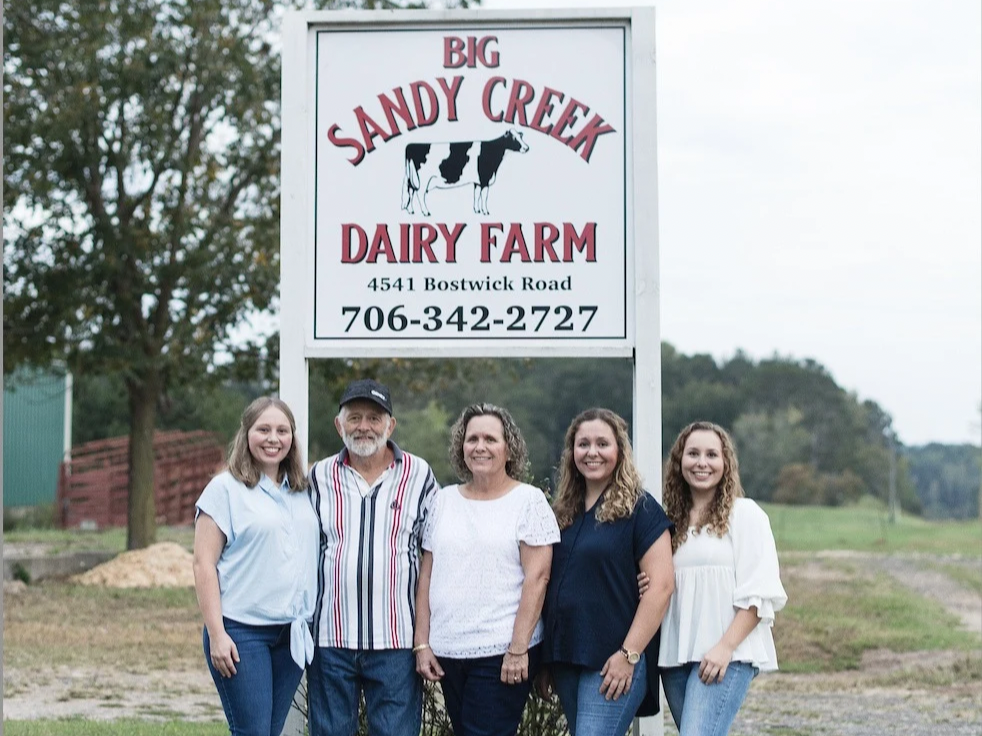
The Benkoski Family; from the Big Sandy Creek Dairy website.
Yet it’s precisely that mix of perspectives, and a shared commitment to the farm, that has allowed Big Sandy Creek Dairy to endure and adapt. From its beginnings as a relocated family farm to its current role as a community-centered operation, the Benkoskis have found ways to stay relevant without losing sight of their roots.
In a world increasingly removed from agriculture, their work offers something rare: a chance to step onto a farm, meet the people behind the milk, and see up close, the care and effort that sustain both cows and community.
