
Roots in the Capital
As America prepares to celebrate its 250th anniversary, it is an opportunity to reflect on the people, industries, and traditions that helped build the nation from the ground up. Among them, agriculture stands at the heart of America’s story, including in the nation’s capital itself.
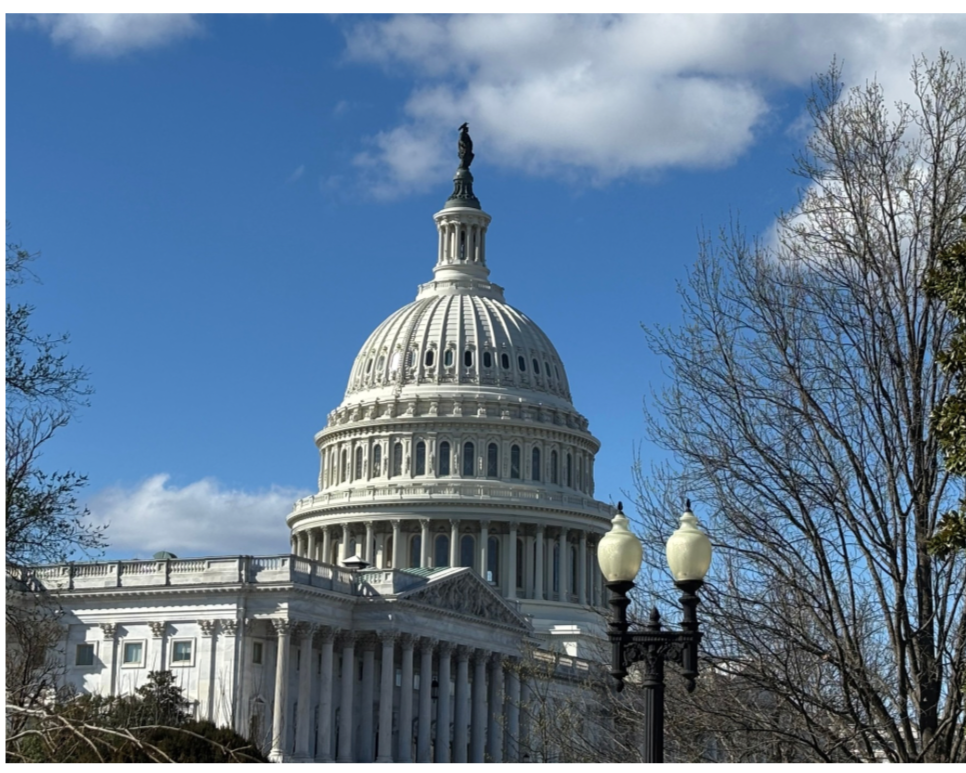
U.S. Capital Building, by CK
Today, Washington, D.C. is known as the political center of the United States. It’s home to monuments, museums, and government institutions. But long before the city became a bustling urban landscape, agriculture played a major role in shaping the nation’s capital and supporting the growth of a young country.
In the early years of Washington, much of the land surrounding the city consisted of farms, gardens, orchards, and open fields. Rural communities supplied food, livestock, tobacco, grains, and produce to residents and government officials alike. Agriculture was not only a way of life, it was essential to the survival, economy, and development of the early United States.
Even the White House once reflected America’s deep agricultural roots.
During the 1800s, the White House grounds looked far different than they do today. Presidents and their families maintained vegetable gardens, fruit trees, grazing areas, and even livestock on the property. Chickens, cows, horses, and other farm animals were once common sights near the executive residence, serving both practical and household purposes.
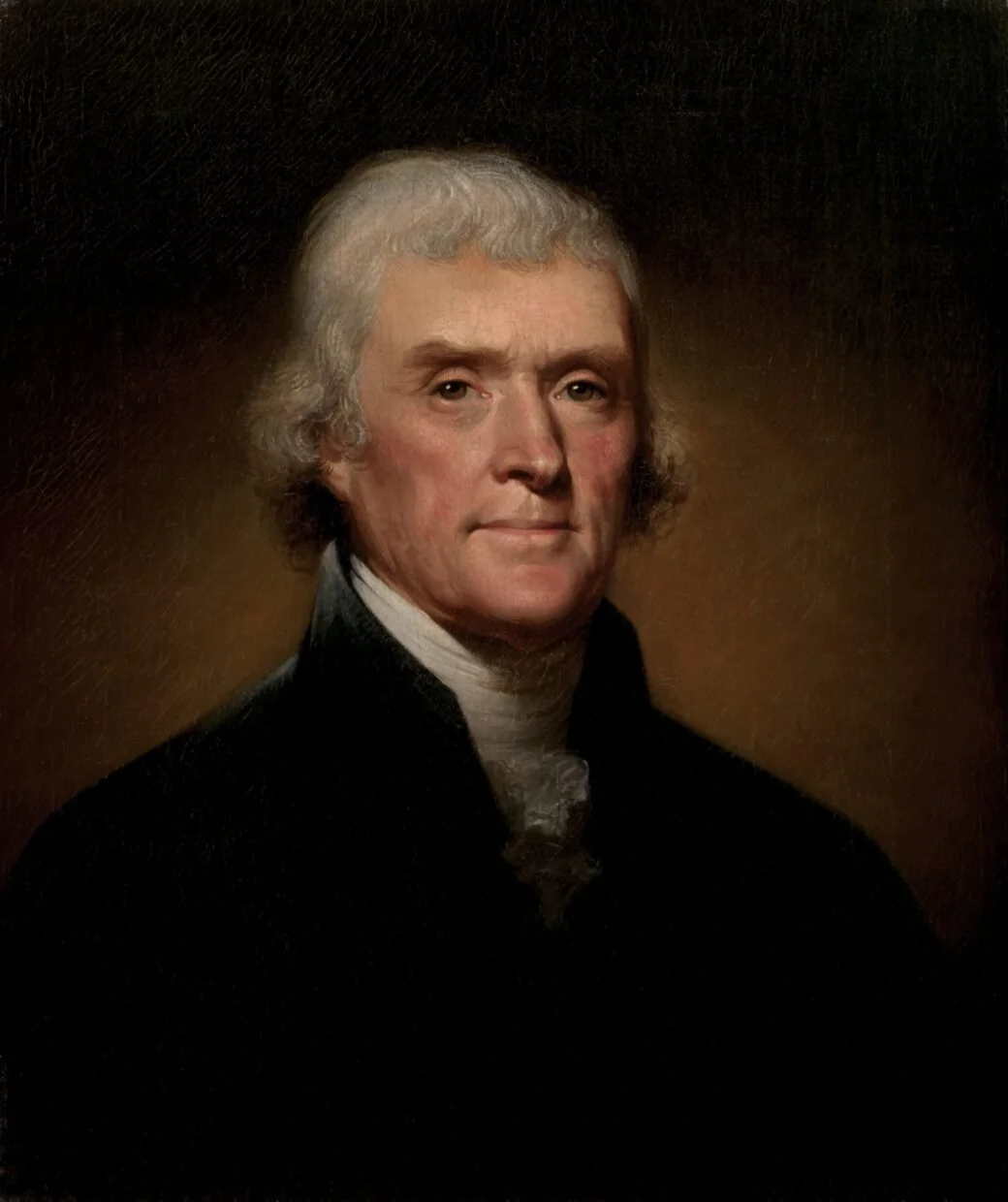
Photo from: https://www.whitehousehistory.org/photos/thomas-jefferson
President Thomas Jefferson, known for his passion for farming and horticulture, helped influence the agricultural character of the White House grounds. He promoted crop experimentation, gardening, and scientific farming practices while advocating for agriculture as the backbone of the American economy. Like many of America’s founding leaders, Jefferson viewed farming as central to the nation’s independence and future prosperity.
Years later, President Woodrow Wilson added another unique agricultural touch to the White House grounds. During World War I, Wilson brought a flock of sheep to graze on the White House lawns. The sheep helped reduce mowing costs while supporting wartime conservation efforts. The wool they produced was later auctioned to raise money for the American Red Cross. The sight of sheep grazing outside the White House became a memorable symbol of agriculture’s connection to national service and sustainability.
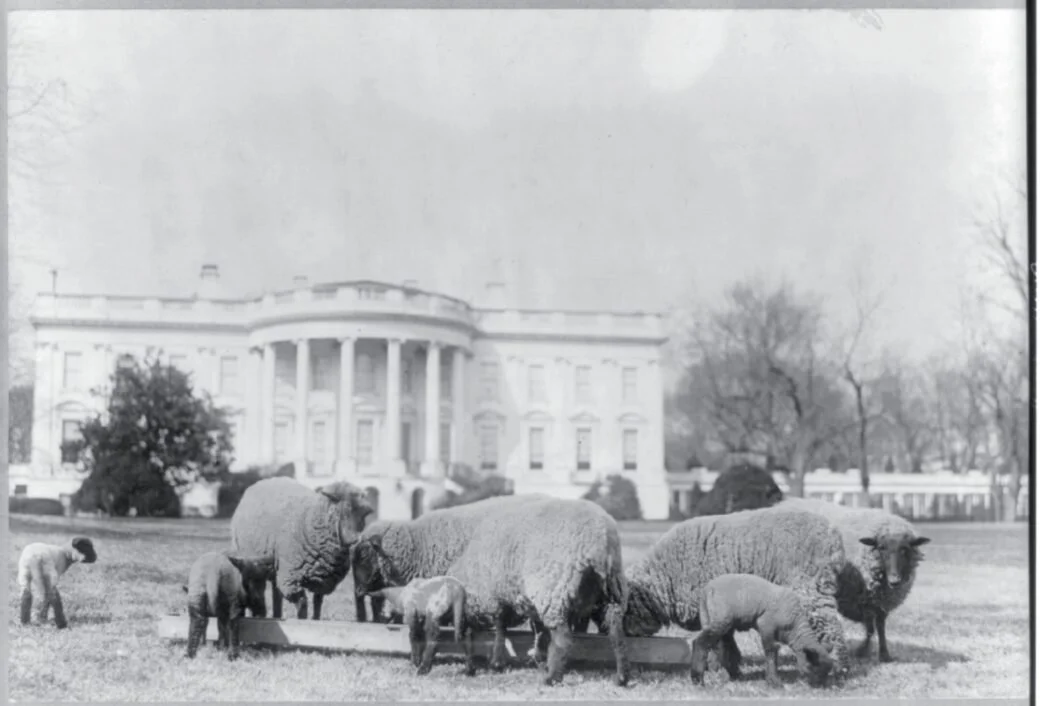
Photo from: https://www.whitehousehistory.org/photos/sheep-graze-on-the-white-house-lawn
Throughout the 19th century, agriculture remained closely tied to everyday life in Washington. Open-air markets operated throughout the city, connecting nearby farmers directly with residents. Wagons carrying fresh produce, milk, eggs, and meat regularly traveled into the capital from surrounding rural communities in Maryland and Virginia.
As the city expanded and urban development increased, much of Washington’s agricultural landscape gradually disappeared. Roads, government buildings, neighborhoods, and infrastructure replaced many farms and fields that once surrounded the capital.
Still, agriculture has never completely left Washington, D.C.
Today, community gardens, urban farms, farmers markets, and agricultural education programs continue to thrive throughout the city. In recent years, there has also been renewed interest in sustainability, local food systems, and gardening initiatives, including the White House Kitchen Garden established in 2009 to promote healthy eating and local agriculture.
As America marks 250 years of history, the story of agriculture in Washington serves as an important reminder that farming has always been deeply connected to American leadership, innovation, and community. From the fields surrounding the early capital to the gardens planted at the White House, agriculture has helped nourish both the nation and its people for generations.
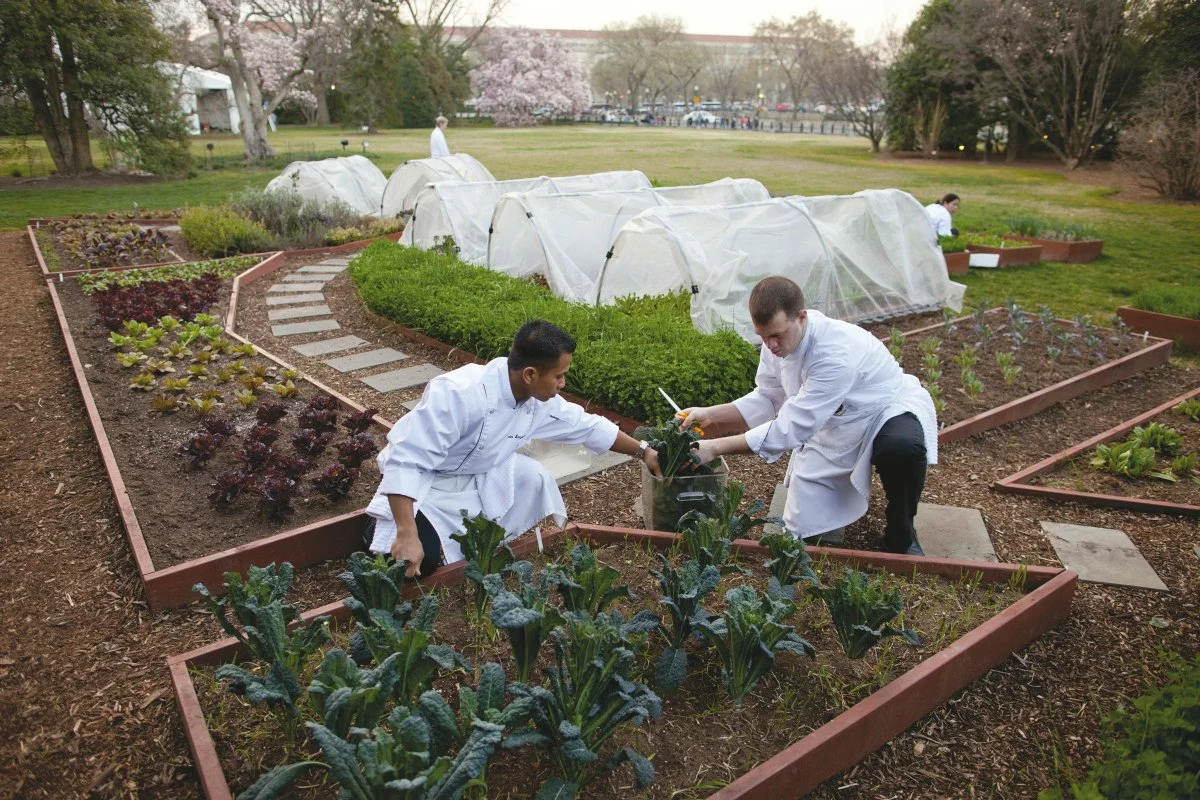
Photo of Chefs Kevin Saiyasak and Jeremy Kapper harvest baby kale and varietals of greens from the Kitchen Garden on the South Lawn of the White House for the State Dinner in honor of Prime Minister David Cameron, 2012. Official White House Photo by Chuck Kennedy
Looking ahead to the future, America’s 250th celebration offers a chance to honor the farmers, ranchers, growers, and agricultural leaders whose hard work helped shape the country over the past two and a half centuries. Even in the heart of the nation’s capital, the roots of agriculture continue to grow, connecting America’s past, present, and future.
