
If you’ve ever drizzled honey into your tea or over warm biscuits, you’ve tasted the work of one of agriculture’s smallest, but mightiest, contributors: the honeybee.
Beekeeping, or apiculture, is far more than honey production. It’s a cornerstone of modern agriculture and a vital thread in the health of our ecosystems. Every jar of honey tells a bigger story. One of pollination, biodiversity, and the delicate balance that sustains our food systems.
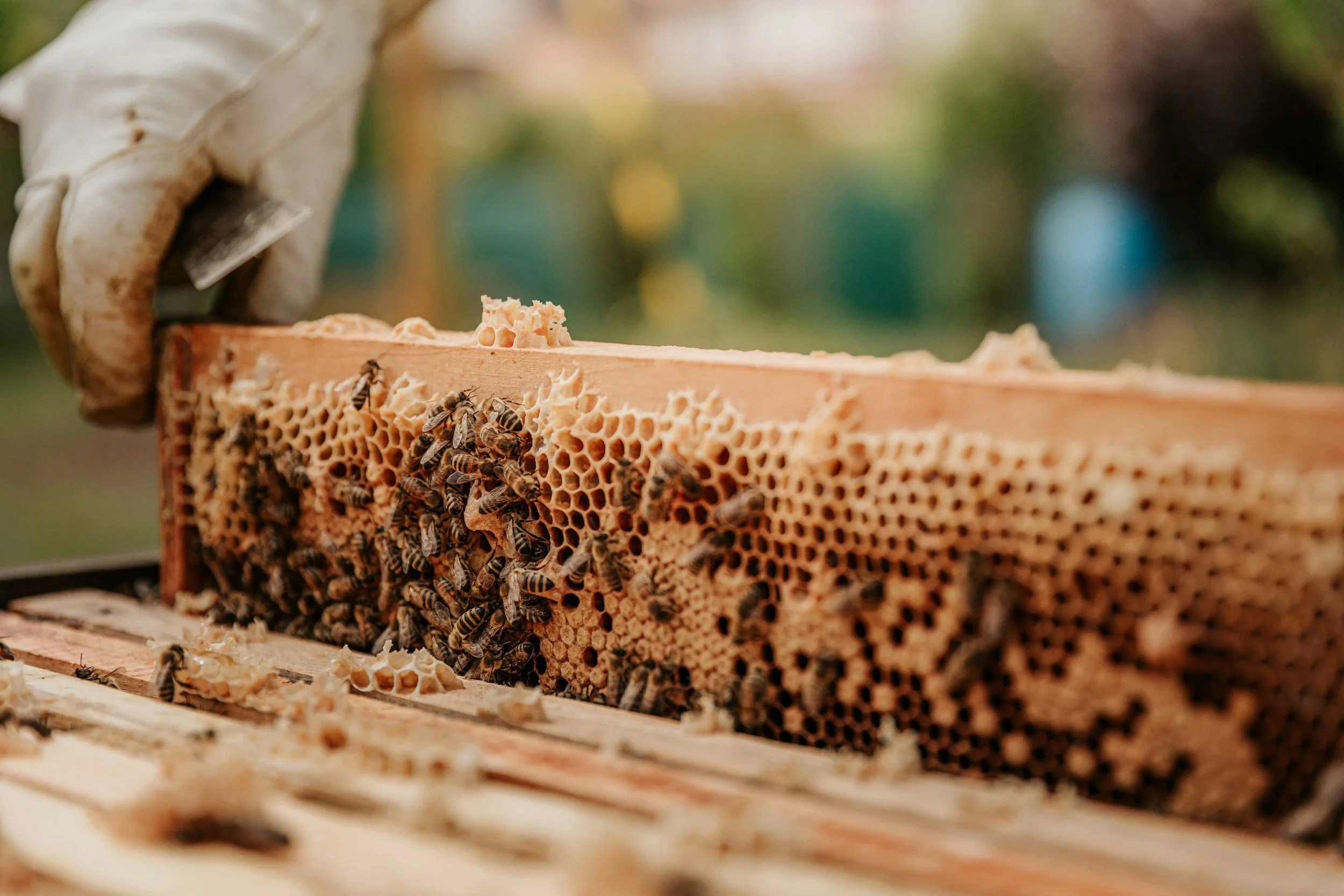
Tending a thriving apiary.
Honey begins in the field, not the jar. Worker bees forage for nectar from flowering plants, carrying it back to the hive where it’s transformed through natural enzymes and evaporation into honey. But in the process, bees are doing something even more important. They’re pollinating crops.
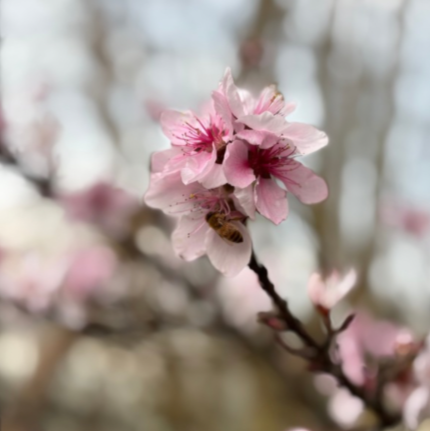
A honey bee pollinates the blossom of a peach tree.
Roughly one-third of the food we eat depends on pollinators like bees. From fruits and vegetables to nuts and forage crops for livestock, bees are essential to both human nutrition and agricultural production. Without them, yields decline, food prices rise, and ecosystems begin to falter.
Bees also sustain entire agricultural systems. They improve crop quality, increase yields, and contribute billions of dollars in economic value each year. For farmers practicing regenerative and sustainable agriculture, bees are especially critical. Healthy pollinator populations help maintain diverse plant life, which in turn supports soil health, livestock nutrition, and long-term farm resilience.
Yet bee populations face growing threats such as habitat loss, pesticide exposure, and even climate change. Supporting pollinators isn’t just an environmental issue, it’s an agricultural priority.
There’s been a lot of buzz in the national news lately. Recently, the First Lady Melania Trump expanded the White House honey program with a newly added beehive to the South Lawn. The White House has maintained beehives since 2009 and this newest addition, crafted to resemble the White House itself, will increase honey production and support pollination of the surrounding gardens.
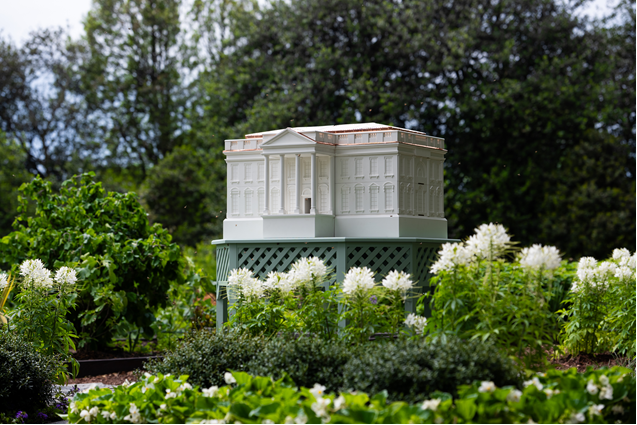
Official White House Photo, Andrea Hanks
At its peak season, each hive can house tens of thousands of bees and collectively produce over 200 pounds of honey annually. The honey produced on the South Lawn is used in the White House kitchens, shared as gifts, and donated to local food programs to further connect agriculture directly to community impact. Beyond production, the initiative also serves as an educational platform, highlighting the importance of pollinators in food systems and environmental stewardship.
Whether on a large-scale farm, a backyard garden, or even the South Lawn of the White House, beekeeping (apiculture) reminds us of a simple truth: agriculture is deeply interconnected.
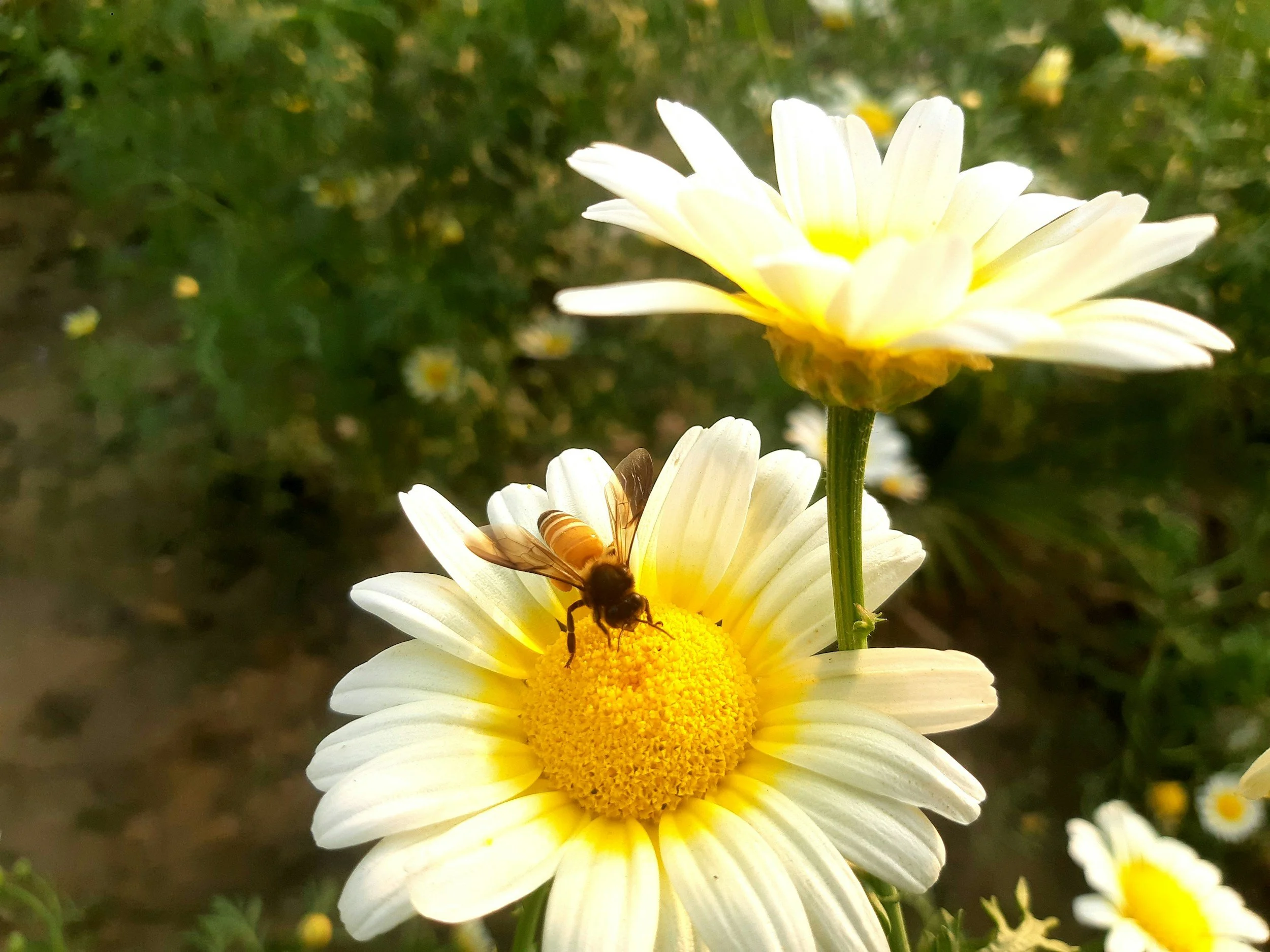
A honeybee feeds on a daisy.
Supporting bees means you’re doing a small part to support farmers. Supporting farmers means strengthening our food systems. And ultimately, it means investing in a healthier, more sustainable future.
So the next time you see a bee moving from bloom to bloom, remember: you’re witnessing agriculture in action.
